

Open your weather app. Is it 80 degrees or do you see 80 in the forecast? Are nighttime temperatures staying above 70?
If yes, your cattle are at risk for heat stress. Even if you didn’t answer yes to either, chances are your cattle will be exposed to heat stress conditions at some point this summer.
Here are some practical tips to keep your cattle more comfortable this summer.
Shade
Offering shade is a common and helpful tool for producers feeding cattle in an open lot.
“There's plenty of data showing that cattle under the shade will perform way better than cattle with no cover,” says Alfredo DiCostanzo, University of Nebraska-Lincoln beef systems extension educator. “You may expect anywhere from one-tenth to one-half or more pounds of gain per day less for cattle without shade.”
If you do invest in shades, make sure to place them thoughtfully, use them only during necessary months and store properly when not in use. Consider where the shade will cast a shadow throughout the day.
-1.jpeg "A1C9F34D-89CB-4C97-8349-486C5D1EFF33_1_102_o (2)-1")
Bedding
Bedding is an option worth considering, especially if you aren’t using shades.
“The bedding will help two things: It keeps the heat from hitting them from the ground, and it will also reflect solar radiation back to the atmosphere. If you have a bunch of black cattle, well, you made them Holsteins,” says DiCostanzo.
Keep in mind, you’ll have to get rid of bedding at some point. DiCostanzo recommends placing bedding on high ground, away from high-traffic areas.
Another tip from DiCostanzo: Don’t process the bedding. Lay the bale out and let the cattle do the work. “It’ll float better on the surface then sink in with the hoof action. That'll help with not destroying that product so fast.”
Sprinklers
Sprinklers are a great option for those really hot days, but if used incorrectly, they can have the opposite effect.
A wind, even just 5 to 7 mph, is critical to ensure the water will run off the cattle. Without wind, that water droplet will sit there, blocking heat from leaving that animal’s body. The bigger the droplets, the better, DiCostanzo says. Mist will create more humidity, but droplets will run off the animals.
Water
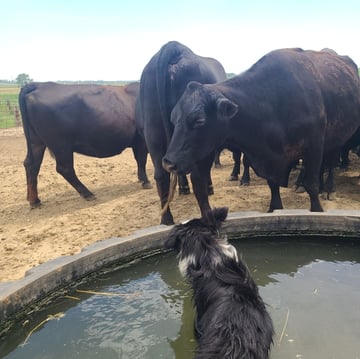
Clean water access is vital for cattle. It’s worthwhile to consider adding an extra water tank to the pen, particularly where some of the shy cattle might hang out.
“On feed, if you're hungry, you compete. On water, if you're thirsty, you fall back,” DiCostanzo says.
Cattle need to drink the equivalent of 80% of their daily feed intake in water. If an animal eats about 20 pounds of feed a day, multiply that by 80% (or 0.8) and you get 16 gallons of water.
It takes about 10 minutes for cattle to consume 16 gallons of water. DiCostanzo recommends offering 5 to 6 inches of water space per head to ensure cattle have ample access.
Nutrition
How much and when cattle eat can impact heat stress.
“Decreasing energy by 5% to 7% can help reduce heat production during digestion. The same can be achieved by pulling intakes back on the current ration cattle are on,” says Kevin Lueger, a beef nutritionist in northeast Kansas.
Feeding at least 70% of daily needs at least two hours after peak heat can also help, as maximum heat production from digestion is four to six hours after consumption. Lueger commonly recommends vasodilator products like capsicum to help dilate blood vessels and get blood flowing to the extremities.
Leaning on your nutritionist to change rations in a pinch can make heat events a little less stressful. Lueger has seen great results by using cattle feeding software to make adjustments in real time.
“Performance Beef makes it very simple to adjust dry matter intakes daily. The analytics are helpful because you can look at how intakes were impacted by previous heat events and easily adjust feed calls based on how they responded previously,” he says.
Fly Control
Lueger and DiCostanzo say fly control can make hot days less stressful for cattle.
“Fly control will help because when flies are biting, cattle like to bunch, which reduces cooling,” Lueger says.
DiCostanzo encourages weed control to help manage fly populations.
“It doesn't take very much for weeds to become a wind barrier, particularly in alleyways, all of those lanes that lead to the lagoon, the lagoon itself. If you can eliminate those weed barriers, that is a form of fly control,” he says.
He also recommends diligently cleaning up feed spills. Barn flies make their home in decomposing organic matter, so feed leftovers are the perfect breeding ground.
Frequently Asked Questions:
What temperature is too hot for cattle? While cattle can tolerate a wide range of temperatures, heat stress risk increases as temperatures rise, especially when humidity is also high. Producers should monitor the Temperature-Humidity Index (THI), watch cattle behavior and take extra precautions during prolonged periods of hot, humid weather.
Which cattle are most susceptible to heat stress? Heavy cattle, black-hided cattle, cattle with thicker hair coats and animals that have recently been transported or processed are generally more susceptible to heat stress. Sick cattle and cattle in crowded pens may also be at greater risk.
Does humidity make heat stress worse? Yes. High humidity reduces cattle's ability to cool themselves through evaporation, making even moderate temperatures more stressful than dry conditions.
How does heat stress affect feed intake? During hot weather, cattle often eat less, particularly during the hottest part of the day. Reduced feed intake can lead to slower gains and lower feed efficiency if heat stress isn't managed.
Can technology help monitor cattle during hot weather? Digital cattle management tools can help producers track feed intake, health treatments, performance trends and other records that may indicate cattle are being affected by heat stress. Having accurate records can make it easier to identify issues early and evaluate management decisions over time.
CHECK OUT PERFORMANCE BEEF FOR YOURSELF
Our digital demo walks you through popular functions in our app, helping you visualize how it can easily become part of your day-to-day tasks.
